
This is the second post in a series from the Schaap family about their effort to reduce their dependence on the modern system and increase their self-reliance called March Off Grid. Read their introductory March Off Grid post here.
My family was attending a wedding this past weekend when a church member came up and asked, “So what’s this I hear you’re going off the grid?”
We’ve had a bunch of questions like this from friends and family since announcing our March Off Grid project.
The content and/or the tone of the questions tend toward a common misconception that I took a machete to the electric line feeding our house and that our 10-member family spends our nights huddled around a trash can fire in the living room.
That sounds like fun, but we’re not quite there yet.
I explained this to our church friend and he politely nodded with a kind expression on his face that read, “You are even crazier than I originally thought.”
I later realized this was a missed opportunity. The real answer to his question is, “Yes, and so are you.”
We are all headed off toward the inevitable, when there is no grid to be on.
The collective grid, made up of parts like the financial grid, geopolitical grid, electric grid and food grid, is tied together by a worn-out shoe string ready to snap.
Some accept that. Some do not. Ignorance is bliss for the rest.
Our family hopes to march off grid on our own terms, adopting a way of life that brings us closer together as a family and prepares us for whatever God has planned.
Yes, we still have electricity.
No, we are not tramping through the mud with a solar flashlight looking for the outhouse in the middle of the night.
Not yet.
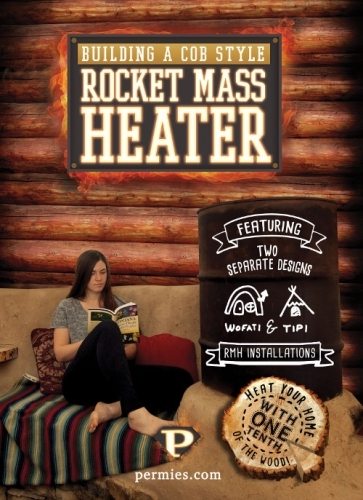
What if there was an off-grid way to heat your home with less fuel (like 80-90% less wood)?
There is, and it’s called the Rocket Mass Heater. In this design, the fire burns sideways, the smoke doesn’t come back up, and the heater stays warm for hours. As a result, it uses 80-90% LESS wood, while producing very little smoke and less CO2 than natural gas or electric heat. Better yet, folks have built these heaters for less than $20!