

If you’ve seen the news in the past week or so, you are aware of the chemical spill in West Virginia that leaked into the Elk River and flowed into the Ohio River. It initially affected at least 300,000 WV residents.
CREDIT: Foo Conner/@iwasaround
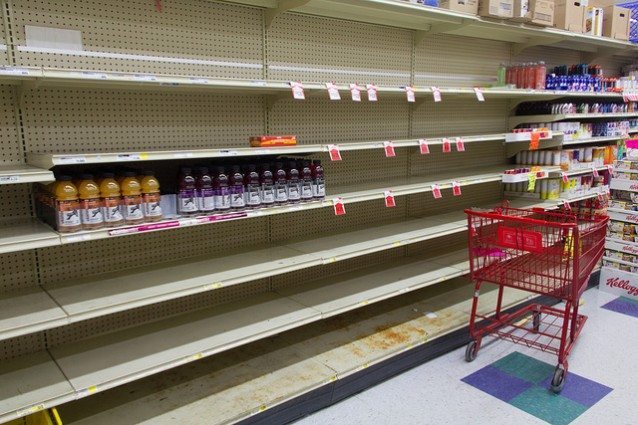
Those unprepared were left to rush to the store to try to get bottled water and many found empty store shelves. News reports even told of Wal-Mart employees requesting police protection while they restocked the shelves. This is West Virginia, folks – a conservative, rural state.
Just another indication that the thin veneer of civilization covering American society is translucent, if not already showing rips and tears at the seams. Imagine what would happen in a larger, more pervasive emergency – especially in urban areas where people are even more disconnected from the realities of survival without modern systems.
A news story yesterday said “Many people are still collecting free water from FEMA at distribution points around the area because they don’t trust the safety of West Virginia’s tap water.”
This points out an important lessons you don’t want to learn the hard way: Don’t get stuck relying on FEMA for survival.
This is all too common in natural or man-made disasters – people take modern systems and conveniences as a given, and make no preparation for the lack of them. What’s amazing is that people are so disconnected from the provision of the essentials of life that they are completely unprepared to provide themselves and their families with the most basic essential of life: Water.
Well, if you don’t already have a good emergency water supply stored up, this incident should be a wakeup call to you that you don’t need to be in a natural disaster zone for an earthquake or hurricane to be subject to a major life-threatening event.
You need to be prepared. To provide the basics of life for your family – water, food, and shelter.
In an effort to accelerate your ability to reach a state of preparedness regarding water, here’s a few resources to consider:
First: Learn how to setup your emergency water supply the right way. If you haven’t already studied this, you need training fast, and water preparedness is one of the important topics covered in The Survival Summit training this week. Here are a few of the sessions to look for and try to attend:
– How to create your own independent sources of water
– Layering your approach to water protection and storage
– At least 7 ways you can purify water in a crisis!
– Purifying your water with distillation, chemicals, and more
– Cheap (almost free) ways to PURIFY even the dirtiest water
– When the grid goes down – how to clean your water WITHOUT electricity
– A checklist of essential water collection, storage, and purification gear you should already own
– How to store your water so it lasts for at least 12 months
Second: Get the right equipment. You’ll need proper storage and purification gear to do it right. What will work for you depends on your living situation and other factors (this is where training comes in – you need to understand how to plan for your situation).
I highly recommend you consider the products from Emergency Essentials. They have been serving the preparedness community for over 25 years, have all the best gear and supplies, and they have a Low Price Guarantee.
They make the research and buying process very efficient. Check out their sections on Water Storage and Water Filtration/Purification to see what you might need to ensure you have an ample supply of water for any emergency.
Water security is one of the important topics that will be covered in the Beyond Off Grid documentary, and that we’ll be addressing in other ways in the future as well. Please let me know if you have any questions or comments about this topic.